Inside a 9,000 sq ft Banquet Hall: When Size Actually Matters for Indian Weddings
Indian weddings stretch banquet halls in ways most spaces aren't built for. Here's what a 9,000 sq ft column-free hall actually solves, and what it doesn't.
There's a reason most banquet halls in Bangalore feel cramped at 500 guests. They were designed for 300.
The standard hotel banquet hall sits between 4,000 and 6,000 square feet. That's enough for a banquet-style wedding ceremony with round tables, but it's tight when the ceremony itself includes a stage, an aisle, a band corner, a buffet line, and 500 people standing for the entry. By the time the buffet opens, the room feels solved by elbow grease, not by design.
A 9,000 sq ft hall changes the math. Here's what it actually fixes, and where size alone doesn't help.
The geometry problem
An Indian wedding banquet doesn't work like a Western reception. There's no fixed seating. Guests circulate continuously between the stage area, the buffet, and the cocktail tables. The flow looks something like this:
- 5–8% of guests at the stage at any time
- 25–35% standing or seated near the buffet
- 30–40% at standing cocktail tables
- The rest moving between zones
For a 500-guest wedding, that's around 200 people in motion, not seated. They need lanes. A 6,000 sq ft hall doesn't have lanes. It has bottlenecks.
What 9,000 sq ft actually opens up
When the hall has a proper footprint, three things become possible that smaller halls force you to compromise on.
A real entry sequence. The bride or groom's entry is the most photographed moment of the night. It needs space: a clear aisle, a wide pivot at the stage, room for the band to be loud without being on top of the audience. In a smaller hall, the entry happens through a 6-foot gap between cocktail tables.
Multi-zone catering. Indian weddings serve cuisines that don't share airflow well. North Indian, South Indian, Asian counters, live grills, dessert, chaat. In 9,000 sq ft, each cuisine gets its own counter with a 4-foot service apron in front. In smaller halls, the counters share queues and the experience compresses.
Staged programming. A typical reception runs: arrival, couple's entry, speeches, performances, dinner, cake, exit. Each stage wants different lighting and a different visual frame. In a column-free 9,000 sq ft hall, you can move the stage configuration without rebuilding the room. In smaller halls, the stage is fixed and everything bends around it.
Where size doesn't help
Big halls have their own problems. The honest list:
- Acoustic dispersion. A larger hall needs more sound reinforcement, more carefully tuned. A bad PA in a big hall is worse than a bad PA in a small one.
- Visual scale. 500 people in a 9,000 sq ft hall feels half-empty if the decor and lighting aren't designed for the volume. Hosts often need to add ceiling installations, draping, or partial partitions to bring the visual scale back down.
- Walking distance. From one end to the other, a 9,000 sq ft hall is roughly 100 feet. That's a lot for elderly guests if the seating is at one end and the buffet at the other. Layout matters more than total area.
So size alone doesn't fix anything. Size plus a good layout fixes a lot.
The Gardenia banquet hall
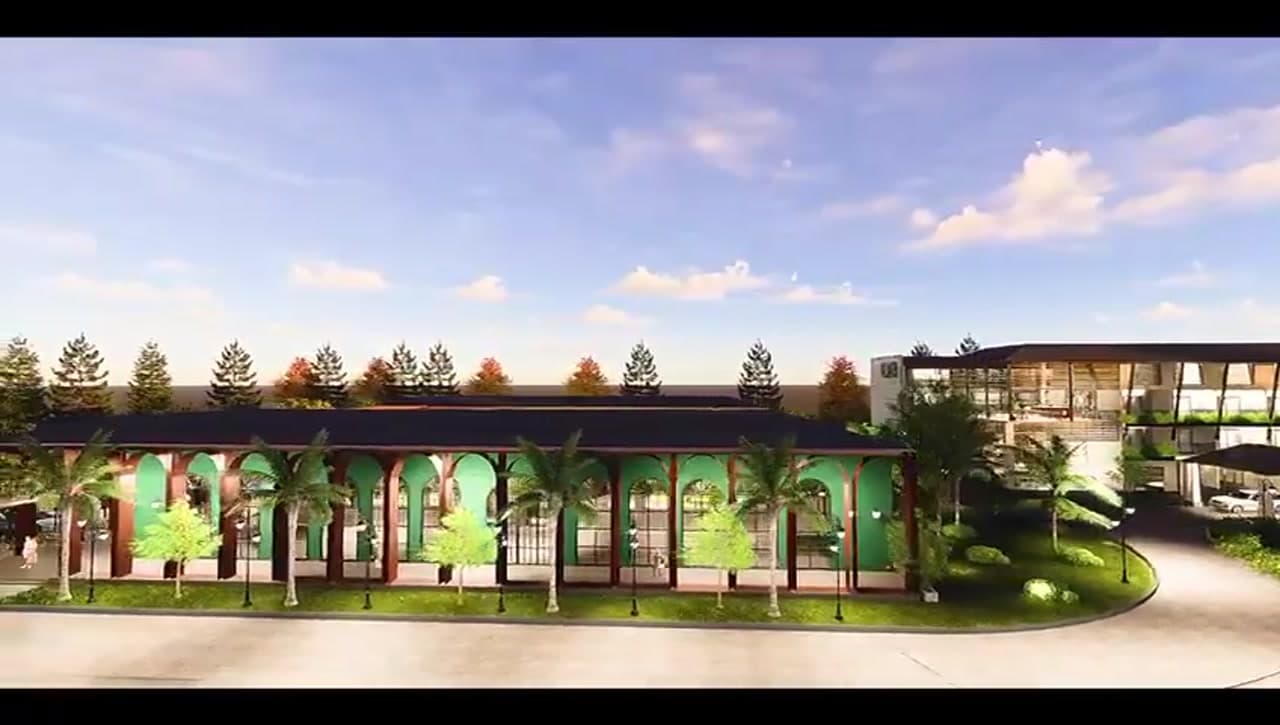
Our hall is 9,000 square feet and column-free. The ceiling height runs to 22 feet, which gives the lighting designer real space to work with. The hall sits next to a 30,000 sq ft outdoor lawn, which means the cocktail hour and a sangeet-style program can run outside while the banquet flips inside.
We've built the room around the geometry problem above. The standard layout fits 500 guests comfortably with a stage, two buffet zones, and dedicated lanes between them. For smaller events, we partition the hall into two halves of 4,500 sq ft each, which gives you a more intimate feel without compromising the catering setup.
For after-party flow, the sky lounge above the courtyard is 30 seconds away by lift. Guests don't have to leave the property.
Plan your celebration
Talk to our events team about availability and packages.
A short test before you book
Whatever venue you're considering, run this thought experiment:
- Picture the moment of the entry. How wide is the aisle?
- Picture the buffet at peak. How long are the queues?
- Picture the speeches. Where does the audio engineer sit?
If the answers feel cramped, the hall is too small for your event. If they feel spacious to the point of being thin, it's too big and you'll need to dress the volume.
The right hall is the one where all three answers feel comfortable. For 500-guest weddings, in our experience, that's somewhere around 9,000 square feet.
Explore the property for the full venue layout, or reach out to our team for a tour with the lights set to evening.